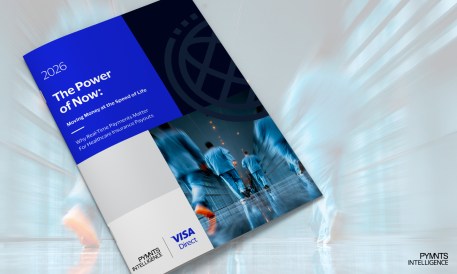
A collaboration between PYMNTS Intelligence and Visa Direct, “The Power of Now: Moving At The Speed Of Life: Why Real-Time Payments Matter For Healthcare Insurance Payouts,” examines why healthcare insurance payouts remain slower than many consumers expect, even after insurance has approved a claim. The report shows that the last step in the claims process, getting money to the member, is often still tied to legacy payout methods such as paper checks and ACH transfers. That creates delays, complaints, errors and compliance concerns for insurers.
The report finds that healthcare insurance has a two-speed payout system. Core claims, such as reimbursements and coordination-of-benefits refunds, remain heavily dependent on traditional rails. More than nine in 10 insurers use ACH for core claims, and nearly as many still use paper checks. By contrast, non-claims payouts, such as wellness incentives, settlements and medical loss ratio rebates, are more likely to use faster options. That gap shows that many insurers already have access to real-time payment capabilities, but those capabilities have not yet reached the claims workflows members may care about most.
Payment processors play a major role in determining payout speed. Most insurers rely partly on outside processors for member payouts, and only about one-quarter of those insurers fully control which payment methods those processors use. That means the path to faster healthcare payouts depends not only on insurer investment, but also on whether processors can support easy-to-integrate real-time options.
The stakes are operational, financial and regulatory. Healthcare insurers report frequent friction, including consumer complaints about payment status, rejected payments, incorrect bank details and late-arriving funds. Larger insurers face especially high compliance exposure when payouts are delayed. Still, the industry is moving. Many insurers are investing in system integration, fraud prevention, verification and automation to support faster member payouts.
Download the Playbook
Moving At The Speed Of Life: Why Real-Time Payments Matter For Healthcare Insurance Payouts
In “Moving At The Speed Of Life: Why Real-Time Payments Matter For Healthcare Insurance Payouts,” learn how:
Healthcare insurers are using real-time payments more often for non-claims payouts than for core claims. This creates a gap between what healthcare insurers can do and how members often receive claims money.
Payment processors shape the speed and choice of healthcare insurance payouts. Their capabilities can determine whether faster payment options reach members.
Delayed payouts create more than a customer service problem. They can raise compliance risk, increase rework and make payment operations harder to manage.
About the Report
PYMNTS Intelligence surveyed 120 U.S. healthcare insurance executives between December 2025 and January 2026 for this study. All respondents hold in-depth knowledge of and decision-making responsibility for the ways their organizations issue payouts to individual members.
Respondents represent healthcare insurance carriers and providers across three annual-revenue tiers: under $100 million, $100 million to under $1 billion and $1 billion or more. The survey measured payout methods, speed of delivery, operational friction, consequences of delayed payments, barriers to real-time payout adoption, forward-looking investment plans and anticipated impacts of real-time capabilities.
The post $252 Billion in Healthcare Payouts Are Waiting for Faster Rails appeared first on PYMNTS.com.